
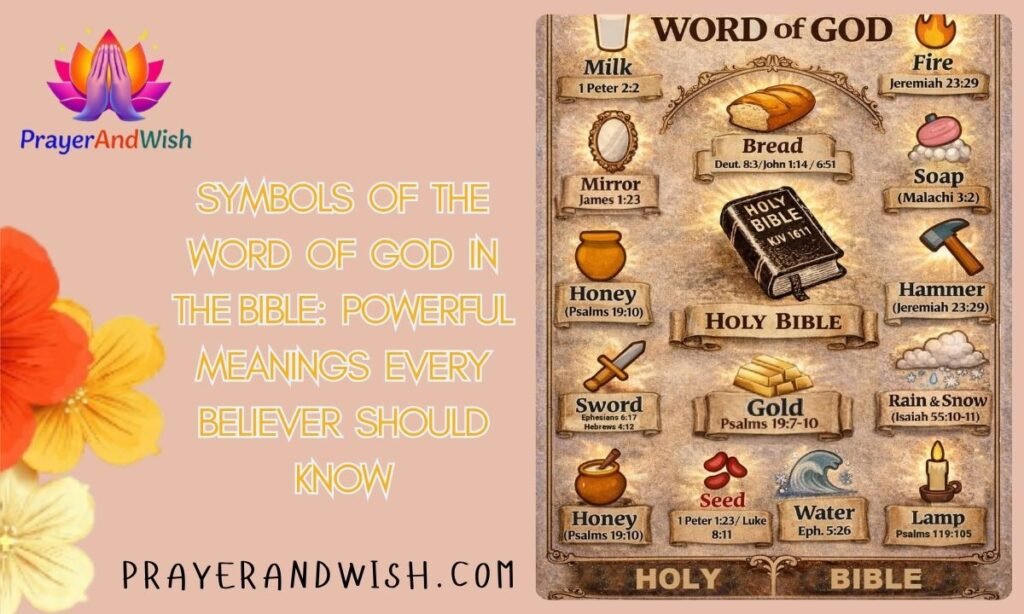
The Bible often explains deep spiritual truths through simple images. These symbols help readers understand the power and purpose of God’s Word. Each metaphor reveals how Scripture transforms, guides, and strengthens life.
Understanding the Symbols of the Word of God
The Word of God is more than written text. Scripture describes it as living, active, and powerful. Believers do not simply read the Bible; they encounter God through it. Because spiritual truths can be difficult to explain directly, the Bible uses vivid imagery to reveal how God’s Word works in human lives.
These symbolic descriptions appear across both the Old and New Testaments. Prophets, psalmists, apostles, and even Jesus used everyday objects to explain the influence of Scripture. Light, water, seed, food, and weapons are all used to demonstrate how the Word shapes faith, transforms character, and guides decisions.
Understanding these symbols helps believers appreciate the many roles Scripture plays in spiritual life. The Word of God guides, nourishes, corrects, cleanses, protects, and reveals truth. Each symbol highlights a different dimension of its power and purpose.
Why the Bible Uses Symbols to Describe God’s Word
Symbolism allows complex spiritual ideas to become clear and memorable. When the Bible calls the Word of God a lamp, a sword, or seed, it creates images that readers can easily understand. These images connect everyday experiences with spiritual realities.
Symbols also deepen meditation on Scripture. Instead of simply reading a verse, believers can reflect on how the imagery applies to their lives. For example, thinking about the Word as water encourages reflection on spiritual cleansing and renewal.
Most importantly, these metaphors reveal that God’s Word works in multiple ways at the same time. It can guide, correct, nourish, and protect simultaneously. Each symbol offers a different perspective on the same divine truth.
The Most Powerful Biblical Symbols of the Word of God
Throughout Scripture, several key images consistently appear when describing the Word of God. Each symbol highlights a unique aspect of its influence.
The Word of God as a Sword
“For the word of God is living and powerful, and sharper than any two-edged sword.” — Hebrews 4:12
The Bible describes the Word of God as a sword because of its power to penetrate deeply into the human heart. A sword cuts through obstacles and exposes what lies beneath the surface. In the same way, Scripture reveals hidden thoughts, motives, and attitudes.
Unlike human wisdom, God’s Word discerns truth from deception. It separates right from wrong and reveals the difference between genuine faith and superficial belief. This ability makes the Word of God an essential tool for spiritual discernment.
In spiritual warfare, the Word also acts as a weapon against falsehood and temptation. Jesus Himself used Scripture to resist temptation in the wilderness. By declaring truth, believers can overcome lies and stand firmly in faith.
The Word of God as Fire
“Is not my word like fire?” declares the Lord. — Jeremiah 23:29
Fire represents purification and transformation. When metal passes through fire, impurities burn away and the metal becomes stronger and purer. The Word of God works in a similar way within the human heart.
Scripture exposes sin, challenges pride, and encourages repentance. This process may feel uncomfortable at times, but it leads to spiritual growth and renewed character. The refining fire of God’s Word removes what does not belong in a believer’s life.
Fire also symbolizes passion and spiritual awakening. When believers engage deeply with Scripture, it ignites a renewed desire to follow God faithfully.
The Word of God as a Hammer
“Is not my word… like a hammer that breaks a rock in pieces?” — Jeremiah 23:29
The hammer symbolizes the power of God’s Word to break hardened hearts. Just as a hammer shatters solid rock, Scripture can break through stubborn attitudes, pride, and resistance.
Many people build emotional or spiritual walls around their lives. These barriers prevent them from receiving truth or experiencing transformation. When the Word of God confronts these barriers, it gradually breaks them down.
This process leads to humility, repentance, and openness to God’s guidance. The hammer of truth does not destroy for harm. Instead, it breaks what prevents spiritual renewal.
The Word of God as a Lamp and Light
“Your word is a lamp to my feet and a light to my path.” — Psalm 119:105
Life often presents uncertainty and confusion. Without guidance, people can easily lose direction. The Bible describes God’s Word as light because it provides clarity in moments of darkness.
A lamp does not illuminate the entire road at once. It reveals the next step. In the same way, Scripture often guides believers gradually rather than providing every answer immediately.
By studying and applying biblical principles, believers gain wisdom for decisions, relationships, and daily choices. God’s Word shines truth into situations where human understanding may fail.
The Word of God as Seed
“The seed is the word of God.” — Luke 8:11
Seeds appear small and ordinary, yet they carry enormous potential for growth. The Bible compares the Word of God to seed because it produces spiritual life when planted in receptive hearts.
Just as farmers plant seeds in soil, believers plant Scripture in their minds and hearts through reading, meditation, and obedience. Over time, these truths grow into faith, wisdom, and righteous character.
However, the growth of a seed depends on the condition of the soil. In the same way, the effectiveness of God’s Word depends on the openness of the human heart. A receptive heart allows the seed of Scripture to grow and produce lasting fruit.
The Word of God as Water
“That He might sanctify and cleanse her with the washing of water by the word.” — Ephesians 5:26
Water cleanses, refreshes, and restores. The Bible uses this image to describe how Scripture purifies the mind and heart. Just as physical water removes dirt from the body, the Word removes spiritual impurities.
Exposure to God’s truth renews thinking and corrects harmful attitudes. As believers regularly read Scripture, their perspectives gradually align with God’s will.
Water also brings refreshment during times of spiritual dryness. When life becomes overwhelming, the Word of God restores hope and renews inner strength.
The Word of God as a Mirror
“Anyone who listens to the word but does not do what it says is like someone who looks at his face in a mirror.” — James 1:23
A mirror reveals what cannot be seen directly. When people look into a mirror, they see their true appearance. In the same way, Scripture reveals the true condition of the human heart.
The Word of God exposes attitudes, motives, and behaviors that may otherwise remain hidden. It invites believers to respond with repentance, humility, and transformation.
However, simply seeing truth is not enough. Just as someone would fix their appearance after looking into a mirror, believers must act on what Scripture reveals.
The Word of God as Food
Bread – Spiritual Sustenance
Jesus declared that people do not live by bread alone but by every word that comes from God. This statement emphasizes that spiritual life requires nourishment just as physical life requires food.
Daily engagement with Scripture strengthens faith and provides wisdom for living. Without this nourishment, spiritual growth becomes weak and unstable.
Milk – Growth for New Believers
The Bible describes the Word as milk for spiritual infants. New believers require simple teachings that help them understand foundational truths. These teachings support early growth and spiritual development.
Solid Food – Maturity in Faith
As believers grow spiritually, they begin to understand deeper truths in Scripture. These teachings function like solid food, strengthening mature faith and discernment.
Honey – The Sweetness of Truth
The psalmist described God’s Word as sweeter than honey. This metaphor emphasizes the joy and satisfaction that come from understanding and applying divine truth.
The Word of God as Rain and Snow
“As the rain and the snow come down from heaven… so is my word that goes out from my mouth.” — Isaiah 55:10-11
Rain nourishes the earth and enables plants to grow. Without rain, crops wither and life struggles to survive. The Word of God works similarly in spiritual life.
When Scripture spreads through teaching, preaching, and personal study, it produces growth, transformation, and spiritual fruit. God promises that His Word never returns empty. It always accomplishes its intended purpose.
This promise provides assurance that Scripture has lasting impact even when results are not immediately visible.
The Word of God as Gold and Treasure
“More to be desired are they than gold, even much fine gold.” — Psalm 19:10
Gold represents value, purity, and lasting worth. The Bible uses this image to emphasize the priceless nature of God’s Word.
Human knowledge changes over time. Cultural ideas shift and fade. In contrast, the truth of Scripture remains constant and reliable across generations.
Believers treasure the Word of God because it provides wisdom, direction, and eternal truth that surpasses worldly riches.
The Transforming Power of God’s Word
Each symbol reveals a different dimension of Scripture’s influence. When combined, they provide a complete picture of its transforming power.
The Word guides like light, nourishes like bread, cleanses like water, and refines like fire. It breaks resistance like a hammer and penetrates hearts like a sword. These images demonstrate that Scripture actively shapes spiritual life.
Through regular study and application, believers experience transformation in thinking, character, and behavior.
How Believers Can Apply the Word of God Daily
Understanding biblical symbols becomes meaningful when believers apply them in daily life.
Reading Scripture regularly allows the light of truth to guide decisions. Meditation on biblical teachings plants seeds that grow into wisdom and faith.
Prayer combined with Scripture invites the cleansing and refining work of God’s Word. Believers who rely on Scripture during challenges find strength and clarity.
Sharing the Word with others spreads the seed of truth and extends its life-giving influence.
Why the Word of God Remains Relevant Today
Despite rapid cultural change, the message of Scripture remains timeless. Human needs for guidance, forgiveness, hope, and purpose have not changed.
The same Word that guided believers thousands of years ago continues to shape lives today. Its teachings address moral questions, personal struggles, and spiritual growth.
Because the Word of God is living and active, it continues to influence hearts, communities, and societies.
Conclusion
The Bible uses powerful symbols to reveal the depth and influence of God’s Word. Through images like sword, fire, seed, water, and light, Scripture communicates its transformative role in spiritual life.
These metaphors remind believers that the Word of God is not passive information. It actively shapes hearts, renews minds, and guides lives toward truth.
When believers embrace Scripture as guidance, nourishment, and truth, they experience the fullness of its power. The Word continues to illuminate paths, refine character, and produce lasting spiritual fruit in every generation.

Hayat has 10 years of experience creating content on Bible verses, prayers, and blessings. She runs PrayerAndWish.com, sharing simple and meaningful spiritual guidance.