
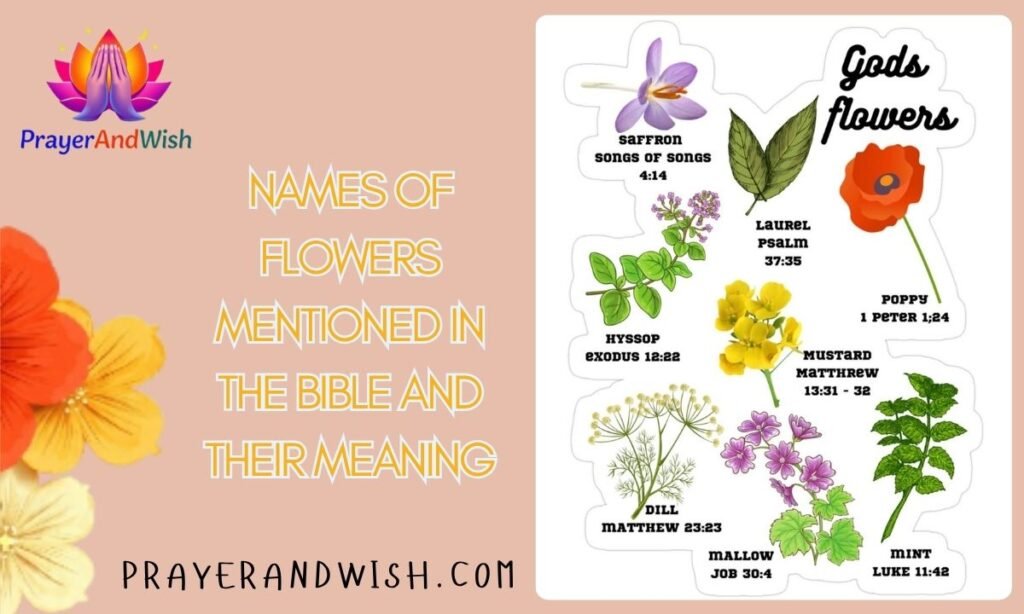
Flowers appear throughout Scripture more than most people realize. Each one carries symbolism, history, and spiritual depth that speaks directly to everyday life. Here are the flowers God chose to include in His Word and what they mean for you.
Names of Flowers Mentioned in the Bible
The Bible uses flowers to teach lessons about faith, beauty, humility, and the nature of God. These are not random botanical references. Each flower appears with purpose and meaning. Understanding them adds a rich layer to your reading of Scripture.
1. Rose of Sharon
“I am the rose of Sharon, and the lily of the valleys.” — Song of Solomon 2:1
The Rose of Sharon is one of the most beloved flowers in the Bible. Many scholars identify it as a wild meadow flower blooming across the plains of Sharon in Israel. It represents beauty, abundance, and the beloved. In the New Testament context, many Christians interpret this flower as a symbol of Jesus Christ himself — the one who is altogether lovely and available to all people, not just a privileged few.
2. Lily of the Valley
“Consider the lilies of the field, how they grow; they toil not, neither do they spin, and yet I say unto you that even Solomon in all his glory was not arrayed like one of these.” — Matthew 6:28-29
The lily of the valley stands as one of the most powerful flowers in Scripture. Jesus used it to teach his disciples not to worry about provision. The lily does nothing to earn its beauty yet outshines the richest king who ever lived. This flower represents divine provision, freedom from anxiety, and the truth that God clothes and cares for those who trust him completely.
3. Henna Flower (Camphire)
“My beloved is unto me as a cluster of camphire in the vineyards of Engedi.” — Song of Solomon 1:14
The henna plant, translated as camphire in the King James Bible, grows naturally across the Middle East and produces small fragrant white flowers in clusters. It was used in ancient Israel for perfume and personal adornment. In Song of Solomon, it represents intimacy, sweetness, and the fragrance of a loving relationship. Spiritually, it points to the pleasant closeness between God and his people.
4. Crocus (Desert Rose/Blossom of the Rose)
“The desert and the parched land will be glad; the wilderness will rejoice and blossom. Like the crocus, it will burst into bloom.” — Isaiah 35:1
Isaiah uses the crocus to describe spiritual renewal and restoration. The crocus blooms in dry, unlikely places — exactly where God does his most surprising work. This flower represents hope rising in hopeless situations. It speaks directly to anyone going through a dry season, promising that God can bring color and life back to the most barren places in a person’s life.
5. Almond Blossom
“The almond tree shall flourish, and the grasshopper shall be a burden.” — Ecclesiastes 12:5
The almond tree is the first tree to blossom in Israel, often flowering as early as January. Its blossoms appear before any other sign of spring arrives. God used the almond branch as a sign of his watchfulness over his Word in Jeremiah 1:11-12. The almond blossom represents awakening, vigilance, and the promise that God is always alert and active — even when nothing around us seems to be moving.
6. Mandrake Flower
“The mandrakes give a smell, and at our gates are all manner of pleasant fruits, new and old, which I have laid up for thee, O my beloved.” — Song of Solomon 7:13
The mandrake plant produces small purple-blue flowers and a strongly scented fruit. In Genesis 30, Rachel and Leah negotiated over mandrakes, showing how highly valued they were in the ancient Near East. The mandrake carries themes of desire, fertility, and longing. Spiritually, it reminds believers that God is the true source of every longing and that only he can satisfy what the heart most deeply wants.
7. Pomegranate Blossom
“Let us get up early to the vineyards; let us see if the vine flourish, whether the tender grape appear, and the pomegranates bud forth.” — Song of Solomon 7:12
The pomegranate blossom is a brilliant red-orange flower that produces one of the most symbolically rich fruits in all of Scripture. Its blossoms decorated the hem of the high priest’s robe and the pillars of Solomon’s temple. The pomegranate blossom represents fruitfulness, righteousness, and readiness for God’s presence. It points to the beauty that precedes an abundant harvest in both natural and spiritual life.
Must Read: 30 Prayers for Making Your Own Decisions With God’s Wisdom
8. Fig Blossom
“The fig tree puts forth her green figs, and the vines with the tender grape give a good smell.” — Song of Solomon 2:13
The fig blossom appears in Song of Solomon as a sign that winter has passed and a new season has come. Jesus also used the fig tree as a sign of the approaching kingdom in Matthew 24:32. The fig blossom represents new seasons, spiritual awakening, and sensitivity to God’s timing. It teaches believers to recognize the signs of what God is doing and to respond without delay when a new season opens.
9. Spikenard (Nard)
“While the king was at his table, my spikenard sent out its fragrance.” — Song of Solomon 1:12
Spikenard is the aromatic flowering plant Mary used to anoint the feet of Jesus in John 12:3. It was extremely costly — worth nearly a year’s wages. The flower represents extravagant worship, sacrificial devotion, and the kind of love that holds nothing back. It challenges every believer to consider whether they are giving God their best or only what is convenient and affordable.
10. Wormwood Flower
“He has driven me away and made me walk in darkness rather than light… He has filled me with bitter herbs and given me gall to drink.” — Lamentations 3:2,15
Wormwood is a bitter flowering plant used throughout Scripture to represent sorrow, judgment, and the consequences of turning away from God. In Revelation 8:11, a star called Wormwood poisons the waters of the earth. Yet even here, the context carries hope — because Lamentations 3 moves from bitterness to the famous declaration that God’s mercies are new every morning. This flower teaches that bitterness is not the end of the story.
11. Myrtle
“Instead of the thornbush will grow the juniper, and instead of briers the myrtle will grow.” — Isaiah 55:13
The myrtle tree produces small white star-shaped flowers and was used in ancient Jewish celebration, particularly during the Feast of Tabernacles. Esther’s Hebrew name, Hadassah, literally means myrtle. The myrtle blossom represents God’s transformation of what was once painful into something beautiful and fragrant. It is a flower of redemption — a visible sign that God replaces thorns with blessing.
12. Wheat Flower
“Unless a kernel of wheat falls to the ground and dies, it remains only a single seed. But if it dies, it produces many seeds.” — John 12:24
Wheat blooms with small, almost invisible flowers before producing grain. Jesus used wheat to explain the principle of death leading to life. The wheat flower is one of the most spiritually profound botanical references in all of Scripture. It represents sacrifice, resurrection, and multiplication. Nothing in God’s kingdom grows without something first being laid down — and the wheat flower is the quiet, humble proof of that truth.
Frequently Asked Questions
What flowers are mentioned in the Bible?
The Bible mentions flowers like the rose of Sharon, lily, myrtle, almond blossom, mandrake, and others with symbolic meaning.
What does the lily symbolize in the Bible?
The lily represents God’s provision, beauty, and freedom from worry as taught by Jesus.
What is the meaning of the Rose of Sharon?
It symbolizes beauty, love, and is often seen as a representation of Christ’s presence and grace.
Why are flowers used in the Bible?
Flowers are used to illustrate spiritual truths like faith, humility, growth, and God’s care.
What does the almond blossom represent?
The almond blossom symbolizes awakening, watchfulness, and God’s active oversight.
What does the myrtle tree symbolize in Scripture?
Myrtle represents restoration, peace, and God’s transformation of hardship into blessing.
What is the meaning of spikenard in the Bible?
Spikenard represents sacrificial worship, deep devotion, and honoring God with costly love.
What does the fig tree or blossom represent?
It symbolizes new beginnings, spiritual awareness, and recognizing God’s timing.
Why is wormwood mentioned in the Bible?
Wormwood represents bitterness, judgment, and the consequences of turning away from God.
What spiritual lesson do flowers teach in the Bible?
Flowers teach that life is temporary but God’s truth, care, and promises remain eternal.
Final Words
Flowers in the Bible are never decorative filler. God chose each one deliberately to carry a message. Whether you are reading about lilies in a field or spikenard at the feet of Jesus, the flower in that story is pointing you toward something deeper. Read Scripture with fresh eyes, and let these flowers speak to you the way they have spoken to believers for thousands of years.

Hayat has 10 years of experience creating content on Bible verses, prayers, and blessings. She runs PrayerAndWish.com, sharing simple and meaningful spiritual guidance.